Learning Outcomes
i. Recognise the skeleton's role in providing structural support for the body.
ii. Understand how the skeletal system facilitates movement in conjunction with the muscular system.
iii. Appreciate the protective function of the skeleton in safeguarding vital organs.
iv. Comprehend the dynamic nature of the skeletal system, including its capacity for growth and self-repair.
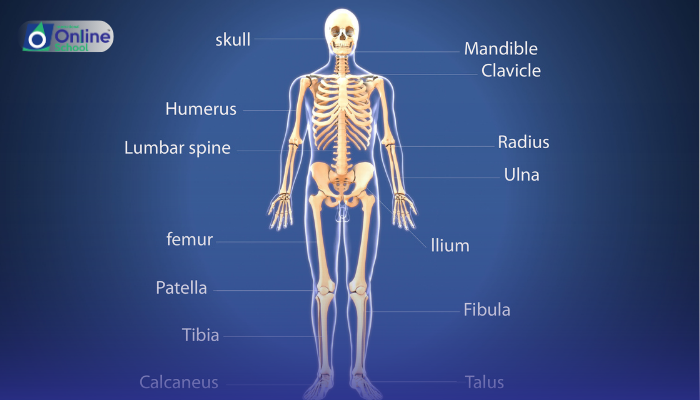
i. Supportive Role of the Skeleton: The skeleton is the framework of the body, giving it shape and support. It holds the body upright and provides a rigid structure for muscle attachment, facilitating posture and stability.
ii. Movement Facilitation
Joints and Muscles: The skeleton's joints allow for flexibility and range of motion, while muscles provide the force needed for movement. The interaction between the skeletal and muscular systems, known as the musculoskeletal system, enables locomotion and all forms of physical activity.
Leverage: Bones act as levers that convert muscular contractions into movement, allowing for complex and precise motions.
iii. Protection of Vital Organs
Rib Cage: Protects the heart and lungs.
Skull: Encases the brain.
Vertebral Column: Shields the spinal cord.
These bony structures are designed to absorb impact and provide a physical barrier against external forces.
iv. Dynamic Nature of the Skeletal System
Growth: Bones grow in length and width through the activity of growth plates and the addition of bone tissue, respectively.
Self-repair: Bones have the ability to heal from fractures through the remodelling process, which involves the resorption of damaged bone and the formation of new bone.
Remodelling: The skeletal system is constantly being remodelled, balancing bone resorption and deposition, maintaining bone strength and mineral homeostasis.
In conclusion, the skeleton is a vital, dynamic system that provides essential support, enables movement, and offers protection for the body's organs. It is also a living tissue capable of growth, adaptation, and repair in response to physical demands and injuries. Understanding these functions underscores the importance of maintaining skeletal health throughout life.
